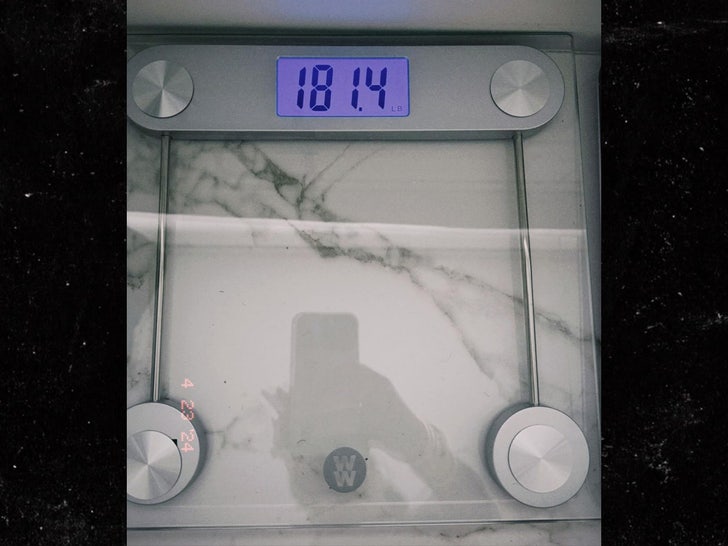




A recent article in the New York Times touts the latest post-birth weight-loss trend -- nursing!

Dr. Wendy Walsh: And for many people, it can work. Celebrities like Angelina Jolie and Rebecca Romijn have gotten on the bandwagon, attributing their superfast slimdowns to breastfeeding. But is there science behind the fad?
Yes there is. In 2008, a landmark Danish study of 36,000 women found that the more a mother breastfeeds, the less she will weigh six months after the birth of her child. A 140-pound woman burns about 1,990 calories a day, but if she's breastfeeding, she can burn an extra 300 to 800 calories a day. Remember, breastfeeding is the whole reason that maternal fat stores are grown during pregnancy -- to save you and your baby during famine.
The important things to consider are the degree and frequency of breastfeeding. Weight loss depends on whether or not a mother exclusively nurses her child. One who exclusively nurses will burn more calories than a mother who supplements with formula. In America, we are still a culture that provides such short maternity leaves, and it is very difficult for working mothers to breastfeed without supplementing. The other obstacle in our culture is the rush to night wean and put babies on an adult sleeping schedule. Believe it or not, this is not natural. Infants are meant to nurse around the clock, based on their needs and growth spurts.
Scheduled feedings can contribute to a number of negative outcomes:
1. Eating disorders, because a child learns to respond to someone else (like advertisers) for their nutritional needs rather than learning to listen to their body's signals.
2. An increase in risk of sudden infant death syndrome if parents attempt to overfill a baby with formula before bedtime. They sleep longer and deeper, which is not necessarily good.
3. An increase in the risk of another pregnancy before one baby has developed enough. Night weaning causes a woman to resume menstruation earlier.
As for my personal story, I exclusively breastfed both my children around the clock, and both times I was back in my jeans within a few weeks of giving birth. Was it the breastfeeding? Or was it the long walks on the beach with my little bundle in the baby sling? Or, was it the fact that I did not overeat during my pregnancy and gained exactly the 35 pounds recommended by my doctor? I'm sure all three were factors, but there is no doubt that the act of producing breast milk causes the body to expend a lot of calories. And if weight loss is the motivation that will get babies healthfully bonded and less sick, then use it, ladies!
![]() | Dr. Wendy Walsh holds a Ph.D. in Clinical Psychology and her area of interest is Attachment Theory, a psychological, evolutionary and ethological theory that provides a descriptive and explanatory framework for understanding interpersonal relationships between human beings. As a psychological assistant registered with the California Board of Psychology, Dr. Walsh has treated individuals, couples and families for a variety of mental health concerns including personality disorders, anger management, eating and substance disorders, and depression. Connect with Dr. Walsh on Facebook. |
7 comments so far | Post a comment now >>
| ||||||||||||
|
advertisement
|
||||||||||||
Win a $5000 Hershey's Diamond Pendant!
Enter Here |
||||||||||||
![]() |
||||||||||||